
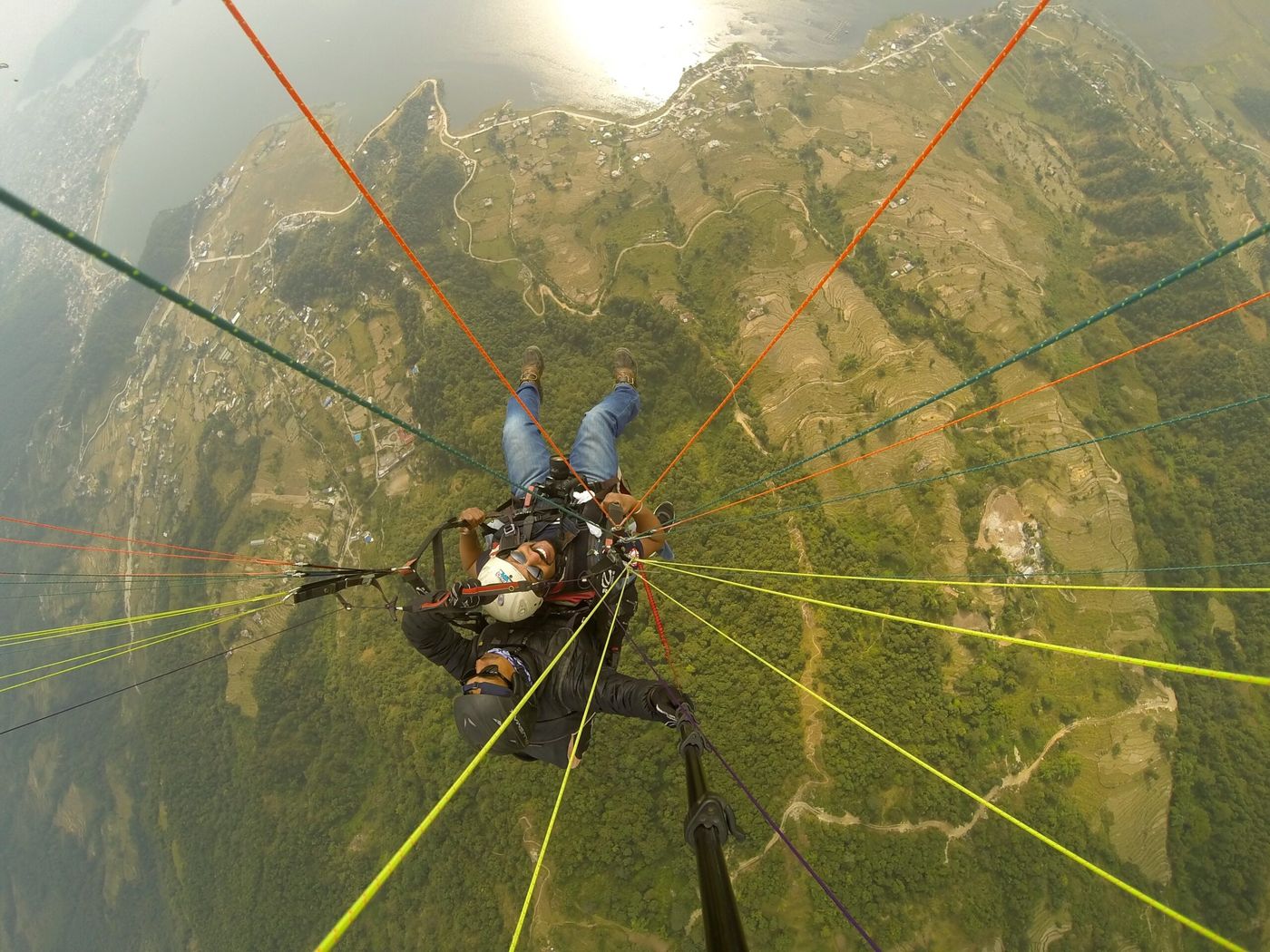
The Wind Beneath My Boots
Paragliding in Nepal
Read More
Boudhanath stupa
Why this is the first thing I do every time I land in Nepal.
Read MorePoon Hill sunrise
A closer look at one of Nepal's most rewarding experiences.
Read MoreNepal sits under the tallest mountains on earth and has built an entire culture around that proximity — prayer flags strung across valleys, stupas ringed with mani wheels turned by hand for generations, trekking routes that double as pilgrimage paths. I’ve hiked there without ever summiting anything higher than a viewpoint, and it didn’t matter; the Himalaya is visible enough from Kathmandu’s rooftops and Pokhara’s lakeside cafés to feel present at all times, a permanent horizon. Kathmandu itself is dense and chaotic and gorgeous in the way old capitals often are, its Durbar Square rebuilt patiently after the 2015 earthquake, its temples still smoking with morning incense. Nepal asks for a slower pace than most itineraries allow, and gives back proportionally to whatever time you grant it.
Chapter One
Kathmandu Valley’s temples
Boudhanath’s enormous white stupa, its painted eyes watching every direction, draws a constant clockwise circuit of pilgrims spinning prayer wheels, and I joined the circuit myself one evening as monks began their chanting from the surrounding rooftop cafés. Swayambhunath, the so-called Monkey Temple, sits on a hill above the city and rewards the climb with both a sunset view over the valley and genuinely mischievous monkeys along the stairs. Patan’s Durbar Square, quieter than Kathmandu’s own, holds some of the valley’s finest Newari woodcarving, still surrounded by working courtyards and metalsmiths rather than roped off as a museum piece.
“Nepal doesn’t need to summit for you; it simply lives at an altitude that keeps the mountains within reach of ordinary days.”
Chapter Two
Into the foothills
I did the Poon Hill trek rather than attempting anything more ambitious, and still got a sunrise view of Annapurna South and Machapuchare turning pink that I think about regularly. The trail passes through Gurung and Magar villages, tea houses serving dal bhat that somehow tastes better at altitude, and rhododendron forest that turns the hillsides red in March. Pokhara itself, the trek’s starting point, sits on a lake with Machapuchare’s fishtail peak reflected in it on clear mornings — a gentler, lower-altitude introduction to the range for anyone unsure about committing to weeks on the Annapurna Circuit or a trek toward Everest Base Camp.
The Short List
Do not miss in Nepal
At a glance
Nepal in numbers
- Capital
- Kathmandu
- Language
- Nepali
- Currency
- Nepalese rupee
- Best time
- October to November and March to April, clear skies for trekking
Did you know
Nepal is home to eight of the world’s ten highest peaks, including Everest, which sits on its border with Tibet.