
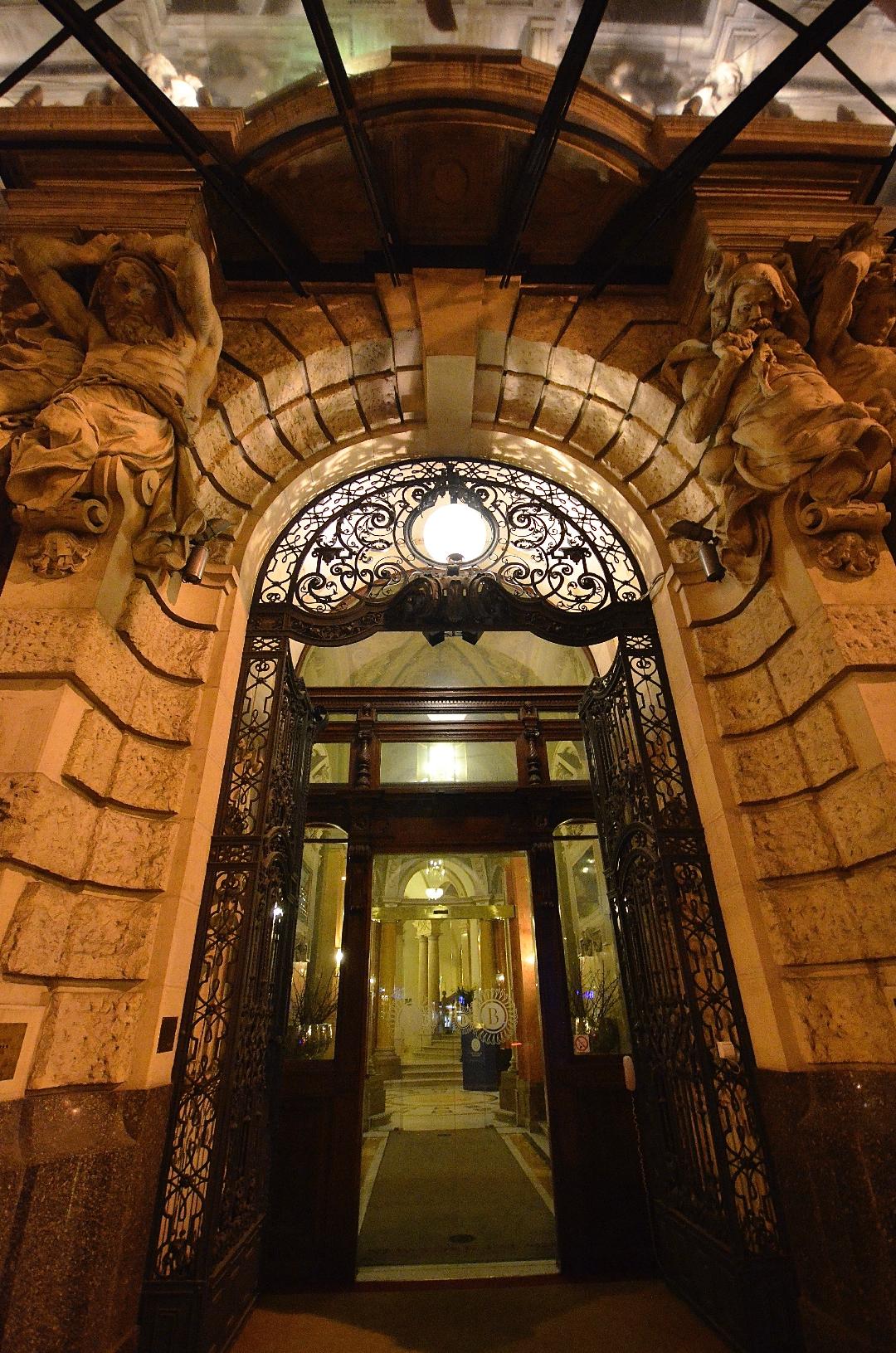
Anantara New York Palace Budapest
An Eddie Global dispatch from Hungary.
Read More
Rudas Baths' Ottoman dome
Why this is the first thing I do every time I land in Hungary.
Read MoreTokaj wine cellars
A closer look at one of Hungary's most rewarding experiences.
Read MoreBudapest sits split by the Danube into Buda's hills and Pest's grid, two temperaments in one capital, and Hungary as a whole shares that duality: Habsburg grandeur laid over a much older, more stubborn Magyar identity. I've soaked in the thermal waters of the Széchenyi Baths at midnight in winter, steam rising off the pools while snow fell on the neo-baroque colonnades around them, an image that still seems slightly improbable to me. Beyond the capital, Hungary is wine country and wetland, the volcanic hills of Tokaj producing a dessert wine once reserved for kings, the Great Plain running flat to a horizon broken only by well sweeps and cattle. Hungarians take their coffeehouse culture, their paprika, and their grievances all equally seriously, and the combination is oddly charming.
Chapter One
Thermal baths as civic infrastructure
Budapest sits on more than a hundred thermal springs, and rather than treat them as a novelty the city built full public bathing culture around them: Széchenyi, Gellért, Rudas, each with its own temperature, architecture, and clientele. I go to Rudas for the Ottoman-era octagonal pool lit by shafts of colored light through the dome, a room built in the sixteenth century that still functions exactly as intended. Locals arrive with chess boards and float for hours in outdoor pools regardless of season, steam rising into cold air. It's not a spa day in the resort sense; it's closer to a sauna's civic role in Finland, an accepted, unglamorous part of how the city relaxes.
“Hungary keeps its grandest architecture wrapped around its most ordinary rituals, which is exactly why both survive.”
Chapter Two
Tokaj and the wine that seduced courts
The volcanic hills of Tokaj-Hegyalja produce Tokaji Aszú, a sweet wine made from grapes left on the vine until a specific noble rot concentrates their sugars, a process the region essentially invented and protected long before French sauternes followed suit. Louis XIV reportedly called it the wine of kings and the king of wines, and Hungarian producers still repeat the line with a straight face because it's true and they've earned it. I toured a cellar cut into volcanic rock outside the town of Tokaj, walls furred black with centuries of wine mold, bottles resting at a steady cool temperature that no refrigeration unit could improve on.
The Short List
Do not miss in Hungary
At a glance
Hungary in numbers
- Capital
- Budapest
- Language
- Hungarian
- Currency
- Hungarian forint (HUF)
- Best time
- May to June, or September
Did you know
Budapest has over 120 thermal springs and more than a hundred public and private baths, more than any other capital city.